
Innovation
India's Shipbuilding Pivot: How Defense Ministry's Ambition Collides With Global Supply Chain Fragmentation
India's push to become a global shipbuilding hub isn't just about maritime capacity—it's a deliberate geopolitical hedge against semiconductor and critical mate
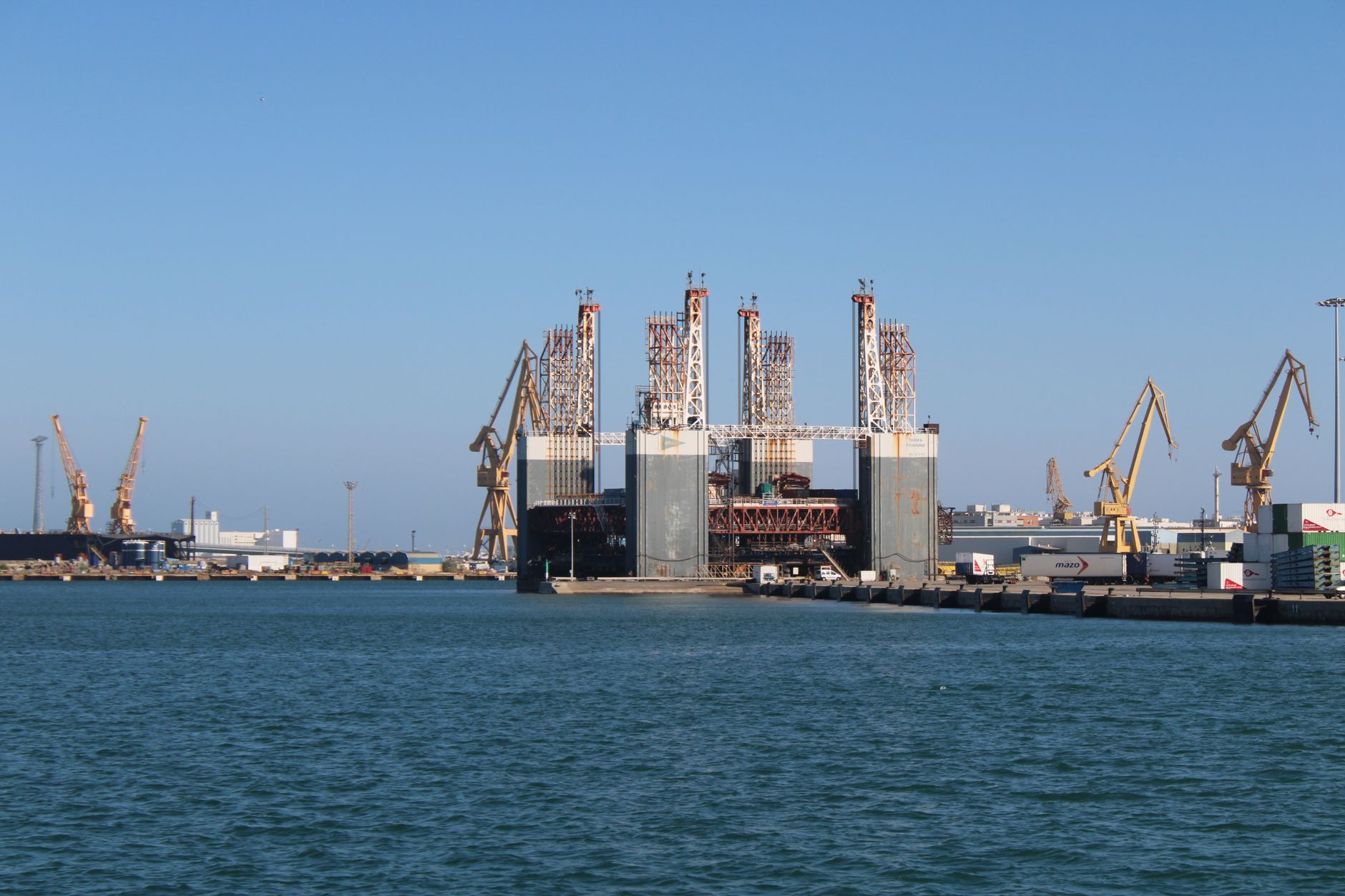
The Unstated Strategic Calculus Behind Rajnath Singh's Shipbuilding Push
Defense Minister Rajnath Singh's recent statement on India becoming a global shipbuilding hub is being widely covered as industrial policy. The real story is quieter but more consequential: it's a strategic response to the weaponization of supply chains and the realization that India's naval ambitions cannot scale without domestic capacity. The announcement, framed around expansion projects in West Bengal (specifically Kolkata), masks a deeper pivot in how India thinks about sovereign industrial capability.
India currently controls less than 2% of global commercial shipbuilding capacity, trailing China (40%), South Korea (30%), and Japan (13%). But that undersells the opportunity. The global shipbuilding order book stands at approximately $160 billion, with average build times of 3-5 years. More critically, 40% of those orders are for liquefied natural gas (LNG) carriers—a vessel type that requires both precision engineering and long-lead materials. India's entry into this market directly threatens the margin structure of Korean yards (Hyundai, Samsung, Daewoo), which currently capture 60% of LNG carrier construction and charge $500M-$900M per vessel.
Why Now? The Supply Chain Fragmentation Thesis
The timing of Singh's announcement is not coincidental. It arrives amid three overlapping crises in global shipbuilding:
1. China's Export Restrictions & The Taiwan Risk China has begun selective export controls on critical metallurgical inputs—particularly rare-earth-grade steel alloys and specialized welding equipment—used in high-complexity ship construction. South Korean yards, which depend on Chinese suppliers for 15-20% of raw materials, face supply risk. India, by contrast, has domestic iron ore reserves (4th largest globally) and is developing indigenous high-grade steel production (SAIL, Tata Steel). A Made-in-India shipbuilding supply chain becomes a hedge against Sino-Korean bottlenecks.
2. The Geopolitical Insurance Play U.S. and European navies are increasingly concerned about dependence on Asian yards for maintenance and modernization. India's strategic partnership with the Quad (US, Japan, Australia, India) creates an implicit demand signal: if India develops Western-grade shipbuilding capacity, it becomes a trusted third supplier for allied navies. This isn't theoretical—Australia has already begun exploring indigenous submarine construction partnerships with India. Japan, facing its own aging shipyards, sees India as a labor-cost-adjusted alternative for non-nuclear vessels.
3. The Container Ship Replacement Cycle The global merchant fleet is undergoing the largest replacement cycle in 30 years. IMO 2030 regulations (stricter fuel efficiency standards) will force scrappage of 8,000+ older container ships by 2030. That's a $240 billion replacement market. China will claim 60% of this by volume. But European and U.S. shipping lines (Maersk, Hapag-Lloyd, CMA CGM) increasingly prefer supply chain diversification. India's entry price—10-15% cheaper than Korea, 25% cheaper than Japan, with quality parity on commodity vessels—creates an immediate competitive opening.
The Hidden Labor Arbitrage & Manufacturing Quality Reframing
Here's what most India watchers miss: the shipbuilding sector is one of the few heavy manufacturing domains where India can compete not just on cost, but on execution speed and integrated supply chain agility.
Why This Matters for Institutional Capital: A shipyard worker in West Bengal or Tamil Nadu earns $8,000-$12,000 annually. A Korean equivalent earns $35,000-$45,000. On a $600M vessel build requiring 2 million labor hours, Indian cost advantage translates to $50-60M in pure labor savings. But the argument for India isn't just cost—it's risk mitigation. Korean yards are at 95% capacity utilization. Adding new capacity in India doesn't cannibalize Korean demand; it captures orders that would otherwise go unbuilt due to timeline constraints.
The critical variable is quality. India's existing yards (Cochin Shipyard, Garden Reach Shipbuilders, Mazagon Dock) have delivered naval vessels to international certification standards (Lloyd's Registry, DNV). The infrastructure exists; what's missing is volume scaling and specialized expertise in certain vessel classes (LNG carriers, large container ships).
The Five-Year Expansion Reality Check
Singh's announcement references "five expansion projects" in West Bengal. These are concrete investments:
- Kolkata's deepwater port development aims to increase draft capacity from 10.5m to 14m, enabling larger vessel construction
- Cochin Shipyard's Phase II targets a 30% capacity increase (800,000 tonnes to 1.04 million tonnes annually by 2028)
- Garden Reach Shipbuilders' defense modernization includes a new module for frigate and advanced frigate construction
Timeline matters. These projects reach operational scale between 2027-2029. By then, the global container ship replacement cycle will be 40% complete. Early movers in Indian yards will capture orders at optimal pricing. Maersk has already expressed quiet interest in Indian construction for a portion of its fleet—not as headline news, but visible in infrastructure investment discussions.
Cross-Domain Implications: Labor, Materials, and Defense Spending
Labor Market Rebalancing India's industrial cities (Kolkata, Kochi, Mumbai) face upward wage pressure in manufacturing. Shipbuilding jobs (avg. $10K-20K annually) are significantly above unskilled manufacturing ($4K-6K) but below IT sector salaries ($25K+). This could create a stability layer for semi-skilled workers and anchor manufacturing talent in Tier-2 cities, reducing the rural-to-Bangalore pipeline pressure.
Steel Industry Implications A mature Indian shipbuilding sector requires 3-5 million tonnes of specialized steel annually. That's roughly 8% of India's current high-grade steel production. SAIL and Tata Steel both have capacity expansion plans. Shipbuilding provides a stable, long-term demand anchor that justifies $2-3B in mill upgrades. This directly impacts India's steel export competitiveness and domestic construction prices.
Defense Budget Efficiency India's defense spending on naval capacity will benefit from domestic yard development. The cost of indigenous frigate construction drops by 15-20% when yards reach efficient scale. Over 20 years, this frees $15-20B for additional vessel procurement rather than cost overruns—a material shift in Indo-Pacific naval balance.
The Risk Layer: Global Overcapacity & Margin Compression
There is a material downside. If India aggressively enters shipbuilding while Chinese yards continue overcapacity production, global vessel prices could compress by 10-15%. Korean yards (already struggling with 4-5% margins) would face existential pressure. Japan's yards would accelerate consolidation. The pathway to profitability for Indian yards depends on capturing 6-8% of global volume within 7 years—not a given, but achievable if quality execution and delivery timelines match commitments.
What Changes in the Next 18 Months
- Q4 2026 / Q1 2027: First large commercial orders awarded to Indian yards for container ships or bulk carriers (likely from Singapore-based or European shipping lines)
- Mid-2027: Cochin Phase II operational capacity announcement; maritime labor unions negotiate new wage scales
- 2027-2028: Quality audit and third-party certification milestones reached; Western navies (possibly Australia) announce exploratory partnership studies
Key Takeaway: India's push to become a global shipbuilding hub isn't just about maritime capacity—it's a deliberate geopolitical hedge against semiconductor and critical materials monopolies, with direct implications for defense procurement timelines, labor arbitrage in high-value manufacturing, and the reshaping of Indo-Pacific logistics corridors.
Source Signals
- India has big opportunity to become global shipbuilding hub, says Rajnath Singh
- Focus on moral values in education, says Pralhad Joshi
Deep research published daily on AtlasSignal. Follow @AtlasSignalDesk for more.
This report was produced with AI-assisted research and drafting, curated and reviewed under AtlasSignal's editorial policy. For corrections or feedback, contact atlassignal.ai@gmail.com.
Related signals
India's Ocean Intelligence Gap: Why GRSE's Sagar Manthan Signals a Quiet Pivot Toward Exclusive EEZ Surveillance and Blue Economy Data Moats
GRSE's indigenous ocean research vessel isn't primarily about climate science—it's infrastructure for real-time Indian Ocean mapping that will underpin maritime
India's Packaging Play: How ISM 2.0's Ecosystem Shift Dodges the Fab Trap and Captures $40B in Antitrust Spillover
While the US antitrust crackdown fragments semiconductor verticals, India is quietly positioning ISM 2.0 to own the 'unglamorous' middle layer—advanced packagin
Kerala's Medical Device Play: How a State-Level Regulatory Shortcut Could Crack India's $3B Device Import Dependency
Kerala's fast-track approval for device parks addresses a structural bottleneck: India imports 70% of high-value medical devices despite having world-class manu
Get the 5 technology signals that matter today
Daily intelligence on AI, business, startups, India, and what happens next. Choose your topics, then subscribe on our secure signup page.
Topics you care about
Free. Unsubscribe anytime. See our Privacy Policy.