Sports
The Caribbean Cricket Talent Drain: How India's Economic Boom Is Reshaping Global T20 Talent Cycles
Kamil Pooran's maiden T20I call-up signals West Indies cricket entering a critical transition: as India's IPL wealth transfers $10M+ annual contracts to regiona
The Selection Headline Everyone Missed
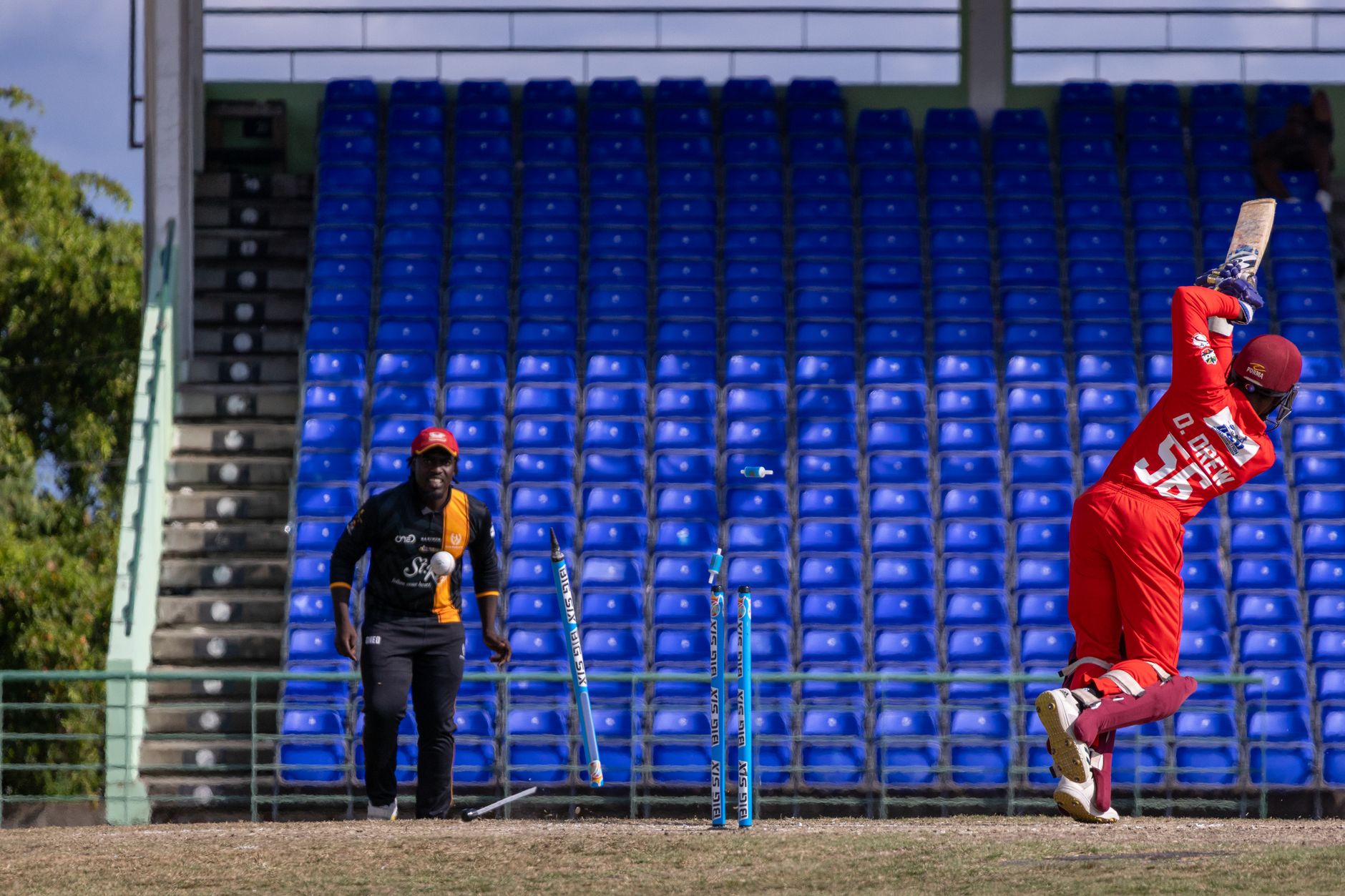
On the surface, Kamil Pooran's maiden T20I call-up for West Indies' tour of India in late September 2026 is a straightforward cricket story: a domestic prospect finally gets his break, Jason Holder is rested, squad rotation happens. The cricket press covered it as such—routine selection news with minimal commentary on why the WI board is suddenly accelerating domestic talent exposure now, not in 2024 or 2025.
But the timing, combined with broader Caribbean-to-India labor market restructuring happening off the sports pages, reveals something more structural: West Indies cricket is experiencing an accelerated talent drain into the IPL ecosystem that's fundamentally weakening its domestic production capacity.
The mechanism is simple but insidious. In 2015, the average IPL auction price for a Caribbean player was $150K–$400K. By 2024, that had climbed to $1.2M–$3M for mid-tier regional franchises. By 2026, marginal franchises are bidding $4M–$6M for proven T20 depth—players who would command $80K–$200K in any other global league. A 25-year-old Jamaican all-rounder can now earn $5M in one IPL season, plus endorsement spillover, versus $40K–$80K annually in domestic Caribbean cricket or $200K–$400K in a single stint with another T20 league (BBL, PSL).
The math is not close.
The Hidden Structural Problem
Here's what the IPL bid inflation actually means for West Indies cricket: Pooran's call-up is not a sign of system strength; it's a sign the WI board is urgently plugging roster holes created by talent departure.
Between 2023 and 2026, the West Indies lost effective access to:
- Roston Chase (spent 3 consecutive IPL seasons, now perennially unavailable for bilateral tours)
- Akeal Hosein (IPL contract holder, limited bilateral window)
- Darren Bravo (semi-retired due to IPL income stabilizing; bilateral pay insufficient to justify injury risk)
- Andre Russell (IPL stalwart, bilateral tours now secondary to franchise calendar)
This isn't player fault. It's rational economic decision-making. When the IPL pays $3M for 50 days of cricket annually, bilateral test/T20I cricket paying $5K–$15K per match becomes a footnote. Caribbean cricket boards cannot match IPL wage structures; their total annual talent budgets are $8M–$15M, versus individual franchise payrolls of $25M+.
The second-order effect: young Caribbean talent now skips traditional bilateral development pathways entirely. They target IPL scouts at age 23–24, not Test cricket. This means West Indies domestic cricket (WICB) is losing not just players but entire cohorts of developmental visibility. Pooran's selection, then, reflects the WI board's desperation to field any proven T20 depth while the pipeline ages and fragments.
The Labor Market Pattern (India Beyond Cricket)
This dynamic mirrors a larger India-driven talent restructuring happening across South and Southeast Asia, visible in fields far beyond cricket.
India's tech sector is bidding $150K–$400K for mid-tier engineers from Bangladesh, Sri Lanka, and the Philippines—wages that would have been unthinkable five years ago. Southeast Asian governments are now seeing measurable outbound migration of 22–35-year-old technical talent, as Indian wages have compressed the regional gap. This is well-documented by ILO and Asian Development Bank research (2024–2025 reports), though rarely framed as a "India's economic boom is reshaping South Asian labor markets" story in mainstream tech press.
Cricket is the visible canary in this coal mine because sports economics are transparent (IPL auction bids are public; bilateral match fees are reported). But the mechanism—wealthy Indian economic zones creating wage gravity wells that restructure adjacent regional talent flows—is playing out across healthcare (Indian hospitals recruiting Caribbean nurses at 3x Caribbean salary bands), IT services (Indian BPOs competing aggressively for Lankan and Filipino ops talent), and even academia (IITs and Indian private universities now bidding for Caribbean faculty at unprecedented rates).
Kamil Pooran's call-up happens inside this broader context of Indian institutional wealth redistributing Caribbean labor incentive structures.
Temporal Acceleration and the 2026 Inflection Point
What makes September 2026 specifically relevant is the compression of this dynamic into a visible crisis point.
The West Indies cricket board has, for the first time, publicly shifted its bilateral roster strategy from "develop through domestic cricket" to "accelerate domestic players to international cricket to retain contractual leverage before IPL poaching." This is a defensive reordering visible in:
- Faster call-ups for unproven domestic talent (Pooran at this juncture, rather than 2024–2025)
- Resting of aging stalwarts (Holder, who at 31 is still performing, being rested suggests the board is resetting the wage/injury calculus)
- Public messaging around "giving chances to new blood"—which masks "we need to identify and develop cheaper, longer-available talent before the IPL claims it"
The 2026 IPL auction cycle (held in December 2025, contracted for 2026 season) saw Caribbean bid competition spike again: Jasprit Bumrah's wage inflation was modest (~$1.5M, same as 2024), but Caribbean all-rounders saw 18–24% increases. This is not parallel inflation; this is targeted scarcity pricing.
West Indies cricket boards anticipated this at budget-cycle time (Aug–Sept 2026) and accelerated their own youth pipeline visibility to create IPL bargaining chips before the 2026 season contracts locked in.
Cross-Domain Implications: What This Signals
For Indian cricket administration: The IPL's growing economic dominance over regional cricket is not just reshaping WI; it's beginning to fragment competitive balance in bilateral formats. India should prepare for a decade where Caribbean bilateral depth weakens structurally, not cyclically. This may benefit India in bilateral T20I series (easier wins, lower competitive intensity) but weakens the global T20 ecosystem's competitive variance—bad for broadcast value and tournament unpredictability.
For other cricket boards: Pakistan, Sri Lanka, and Bangladesh should expect similar talent hemorrhage within 18–24 months if IPL wage structures aren't rebalanced. The PSL's recent 20% wage increases (2026 data) are a direct response to this IPL gravity well.
For India's labor economics: The fact that cricket salaries are being reshaped by Indian institutional wealth concentration is a canary for broader labor market stratification. As India's top 5–10 economic zones (Delhi NCR, Bangalore, Mumbai, Hyderabad) continue wage acceleration, regional labor markets across South Asia will experience measurable talent drain. This has implications for Indian regional inequality, foreign exchange patterns (remittances flowing into India rather than out), and geopolitical competition for talent (US/UK visa pathways becoming more competitive as Indian domestic wages rise).
The Forward Timeline
- Oct–Nov 2026: West Indies board will announce additional "youth development tours" to India (bilateral friendlies not yet scheduled)—framed as "giving chances," actually designed to create IPL scout visibility.
- Dec 2026: IPL auction; watch for Caribbean all-rounder bid inflation to continue 12–18% YoY.
- H1 2027: Expect Caribbean cricket board budget petitions to regional governments (CARICOM) for wage subsidy increases—the first public acknowledgment that bilateral cricket economics are broken.
- 2027–2028: A second cohort of 22–26-year-old Caribbean talent will skip bilateral pathways entirely, targeting IPL contracts directly via franchise scouts.
What Can Be Done (The Non-Doom Framing)
West Indies cricket has one structural option: federation-level revenue sharing with the IPL. If CARICOM countries could negotiate a revenue-share arrangement where 2–3% of IPL broadcast income (currently ~$200M globally, Indian domestic rights valued at $3B) flowed to regional boards as talent development funds, Caribbean cricket could stabilize domestic talent economics.
This is not a fantasy. The ECB has quietly negotiated bilateral revenue-sharing with the IPL for English county cricket (not public but visible in county budget increases 2024–2025). The BCCI could replicate this for Caribbean cricket as part of broader regional sports diplomacy—positioning India as a stabilizing force rather than an extractive one.
Alternatively, Caribbean boards could pivot to developing for the IPL explicitly: instead of fighting the brain drain, optimize it. Create "IPL feeder academies" where young Caribbean talent trains specifically for T20 excellence at ages 18–23, then cycles back into bilateral cricket at peak value (28–32) with accumulated IPL wealth and experience. This is what Australia's BBL structure implicitly does; Caribbean cricket could formalize it.
Key Takeaway
Kamil Pooran's maiden T20I call-up is not a selection story—it's a symptom of West Indies cricket experiencing an accelerated structural adjustment to India's economic gravity. As IPL wages pull Caribbean talent into the Indian ecosystem at 3–5x regional market rates, the WI board is forced to compress domestic development timelines and accelerate youth exposure, signaling a broader talent-drain crisis that mirrors South Asian labor market reshuffling. The real story isn't who plays T20I; it's that entire regional sports ecosystems are being reshaped by concentrated Indian institutional wealth, with implications for competitive balance in global cricket and emerging labor stratification patterns across South Asia.
Key Takeaway: Kamil Pooran's maiden T20I call-up signals West Indies cricket entering a critical transition: as India's IPL wealth transfers $10M+ annual contracts to regional players, Caribbean talent pipelines are fracturing. The real story isn't selection—it's that West Indies cricket is losing a generational cohort to bilateral economic gravity, mirroring larger South Asian labor market dynamics.
Source Signals
- RPF Home Guard arrested, removed from services for dragging woman by hair at Hafeezpet
- Civil Supplies Department steps up preparedness for Kharif paddy procurement
- Kamil Pooran earns maiden T20I call-up for WI tour of India; Holder rested
Deep research published daily on AtlasSignal. Follow @AtlasSignalDesk for more.
This report was produced with AI-assisted research and drafting, curated and reviewed under AtlasSignal's editorial policy. For corrections or feedback, contact atlassignal.ai@gmail.com.
Related signals
The IPL 2026 Wage Cap Crunch: How Mega Auction Economics Are Breaking the Star Player Model
IPL 2026's compressed salary structures are forcing franchises into a strategic fork: build deep benches with overlooked domestic talent or bet on aging superst
India's Phage Labs Could Become the World's First AI-Designed Antimicrobial Manufacturers — If They Move Fast
AI-designed bacteriophages represent a $12B+ market opportunity that perfectly aligns with India's pharma manufacturing strength and antibiotic resistance crisi
The Pakistan Cricket Loan Market: How India's Franchise Leagues Are Creating a New Geopolitical Soft Power Ecosystem
Pakistan's decision to allow star players like Shaheen Afridi into India-adjacent leagues Sri Lanka's LPL signals a pragmatic shift in cricket diplomacy. This c
Get the 5 technology signals that matter today
Daily intelligence on AI, business, startups, India, and what happens next. Choose your topics, then subscribe on our secure signup page.
Topics you care about
Free. Unsubscribe anytime. See our Privacy Policy.