India
Kerala's K-TET Crisis: How Teacher Credentialism Collapse Is Reshaping India's Ed-Tech and Public Service Reform Landscape
Kerala's K-TET grade denial protests expose a fundamental fracture in India's teaching qualification system — one that's collapsing the distinction between meri
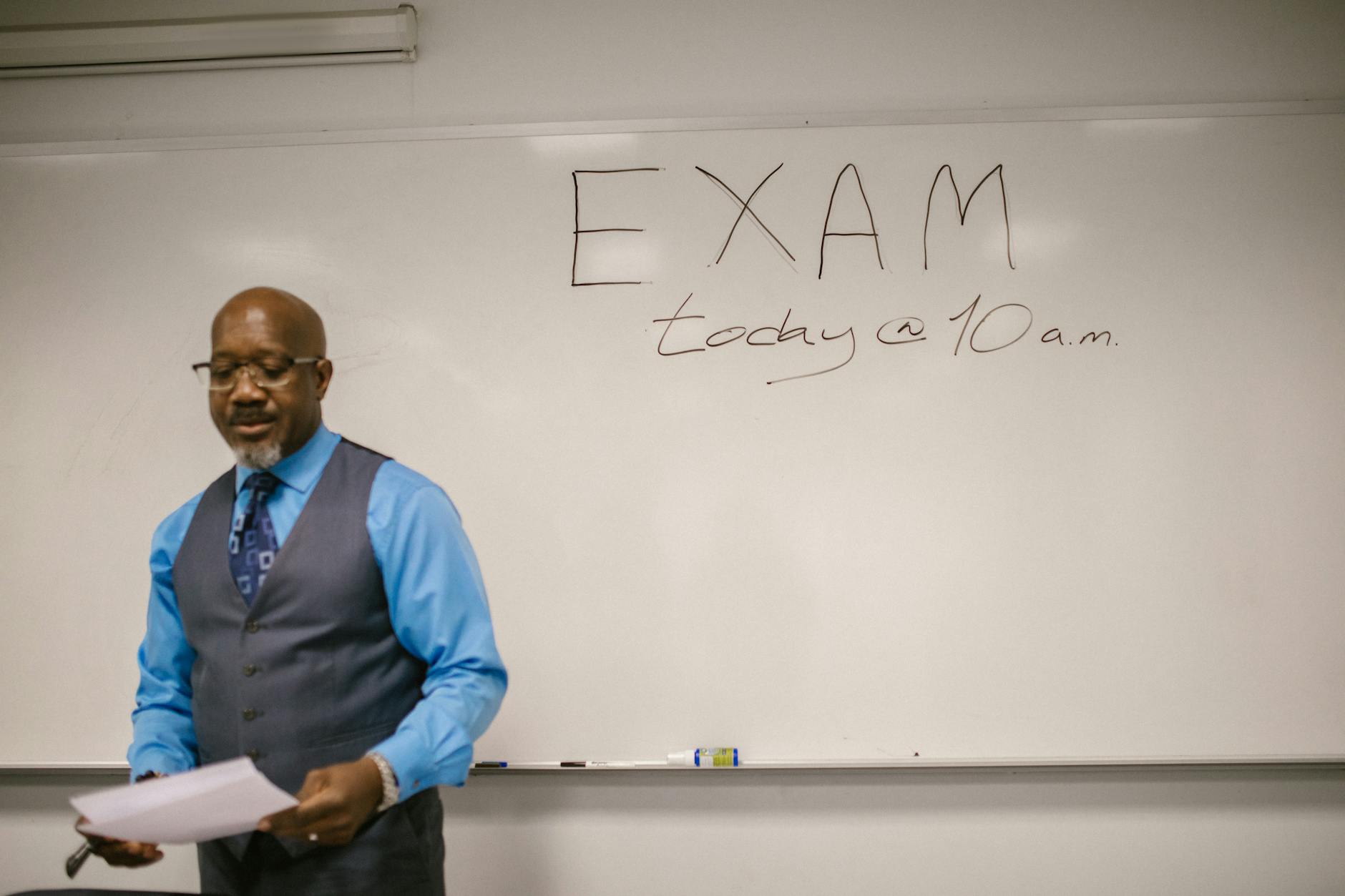
The K-TET Grade Denial Crisis: A Window Into India's Crumbling Teacher Credentialism
The K-TET (Kerala Teacher Eligibility Test) grade denial protests are not simply a localized HR grievance. They represent a cascading institutional failure that will reshape how India validates, hires, and retains teachers — with consequences rippling into ed-tech funding, civil service reform agendas, and the emerging market for teacher credential blockchain platforms.
What Is Actually Happening
On August 17, 2026, the Kerala head teachers' forum formally protested the denial of higher grade classifications to qualifying K-TET candidates who technically met the score thresholds. The issue: candidates who scored above the cutoff for Grade II positions were not automatically elevated to Grade I classifications despite historical precedent suggesting they would be.
This is not a minor procedural complaint. Under Kerala's teacher hiring framework, Grade I and Grade II positions carry distinct salary scales, pension benefits, and career progression paths. A teacher denied Grade I classification loses approximately ₹3–5 lakh in cumulative career earnings and pension value — a devastating long-term hit for educators who invested years in test preparation.
More critically: the state education department's rationale for denial was opaque. No public communication clarified why the grading criteria shifted mid-cycle. The forum's complaint suggests the department moved goalposts without transparency — a pattern that erodes institutional trust in credentialing itself.
Why This Matters Now (Three Converging Crises)
1. The Credentialism Legitimacy Problem
India's teacher hiring system is built on a covenant: pass the eligibility test, get the promised position grade. When Kerala's government breaks that promise retroactively, it signals that state-administered teaching credentials are conditional and subject to fiscal/political whim.
This has immediate psychological consequences. Teachers who invested in K-TET prep (coaching fees: ₹15,000–50,000 per candidate) now face a cruel calculus: the certification you earned doesn't guarantee the outcome it advertised. This same logic is spreading to other state TET frameworks (Maharashtra, Tamil Nadu, Haryana have parallel systems). If Kerala's unilateral grade-denial precedent holds, it creates contagion risk across 28 state education boards.
For ed-tech platforms (Byju's, Unacademy, Vedantu competitor teaching certification tracks), this is a competitive moat erosion moment. These platforms have been building credentialing products that promise "job-ready teacher training." But if state TET credentials — the end-user currency — become unreliable, the value proposition of private ed-tech teacher prep evaporates.
2. The Public Service Reform Angle (Hidden in Plain Sight)
Kerala's K-TET crisis illuminates a deeper pathology in India's civil service and public sector hiring: centralized institutions (state education departments, SSC, UPSC) are treating credentials as budget tools, not merit signals.
The grade denial likely stems from budget constraints. Promoting teachers to Grade I costs more. Rather than transparently reducing hiring or acknowledging fiscal limits, Kerala's education department appears to have used administrative discretion to suppress grade-based promotion costs. This is functionally equivalent to post-hoc credential devaluation — a hidden tax on merit.
This pattern repeats across Indian public sector hiring:
- NEET seat caps (2024–2025): Medical council reduced available seats after candidates had already invested in prep, effectively retroactively cutting the success rate.
- SSC exam delays and repeated cancellations (2023–2025): Candidates lose months, coaching fees stack, and the government's credibility erodes.
- UPSC civil service hit-rate compression: As more candidates prepare, the same total seats mean individual success probability drops — but the institution doesn't adjust transparency.
Kerala's K-TET protest is the teacher-specific manifestation of a systemic problem: India's public sector credentialing bodies are using opacity and retroactive policy shifts as implicit rationing mechanisms.
3. The Union Power Vacuum (SFI's Parallel Protest Signal)
The SFI (Students' Federation of India) defiance on the same dates — holding campus events despite denied permission (August 18) — is not coincidental. Both events signal institutional loss of control.
When teachers' forums and student unions openly challenge state authority on the same issue trajectory (education, state credibility, institutional transparency), it suggests a broader delegitimation happening in Kerala's public institutions. The SFI's event was framed as educational; the tacit message was: "The state can't be trusted to administer fairly, so we'll self-organize."
This is a political risk signal for any ed-tech investor betting on India's public sector teacher hiring as a growth vector. If teacher unions + student unions are in coordinated mistrust of state TET administration, state governments will face pressure to either (a) make credentialing criteria transparent and immutable, or (b) outsource hiring to private/NGO intermediaries.
Cross-Domain Impact: Where This Cascades
Ed-Tech Teacher Certification (Next 12 Months)
Platforms like Vedantu and Unacademy's teaching certification partnerships with state education boards will face margin pressure. If state TET credentials become unreliable, ed-tech partners face a reputational hit for "selling" a certification whose value is no longer guaranteed. Expect accelerated pivots toward private school teacher hiring (where schools retain credentialing control) and direct-to-institution training contracts rather than mass-market test-prep.
Civil Service Reform Agenda (12–24 Months)
Kerala's crisis will likely trigger a national-level review of TET uniformity. The government may push for:
- Centralized TET (national test, state-administered) to reduce grade-denial arbitrage
- Binding timeline commitments (e.g., "grades must be announced within 30 days")
- Transparent, formula-driven grade allocation (no discretion)
These reforms would benefit UPSC/SSC infrastructure but could cannibalize state autonomy. Expect coalition politics to intensify around this issue by late 2026.
Blockchain Credential Pilots (18–36 Months)
The legitimacy crisis creates an opening for blockchain-based teacher credential registries. Organizations like the National Council for Teacher Education (NCTE) may accelerate exploration of immutable, tamper-proof credential issuance. This is long-term but the demand signal is crystallizing now.
Labor Market Segmentation (Immediate)
Teachers denied Grade I classification face a brutal choice: (a) accept Grade II and sue, (b) pivot to private schools, or (c) retrain for ed-tech roles. The outflow of talent from public sector teaching into ed-tech will accelerate. This raises quality concerns for public school classrooms but creates hiring opportunities for ed-tech platforms' live-teaching models.
What Could Happen in the Next 6–18 Months
Near-term (September–December 2026):
- High Court challenge to K-TET grade denial framework; Kerala education ministry forced to issue clarification within 90 days.
- Other state education boards pre-emptively announce "no retroactive grade changes" policies to avoid contagion.
- Vedantu/Unacademy adjust marketing messaging away from "state TET certification paths" toward "private school hiring pipelines."
Medium-term (Q1–Q2 2027):
- National Panel on Teacher Credentialing reform initiated; NCTE proposes unified TET grading framework.
- First state (likely Tamil Nadu or Maharashtra) announces blockchain-backed credential issuance pilot.
- Teacher union federations demand "credential immutability clauses" in new hiring contracts.
Long-term (2027–2028):
- Shift toward competency-based hiring (schools test classroom performance) rather than credential-based hiring (passing a state test). This reduces state TET relevance.
- Ed-tech platforms become de facto teacher credentialing bodies for private schools; public sector TET becomes residual.
The Risks Nobody Is Talking About
Risk 1: Institutional Trust Cascade If teachers lose faith in state credentialing, parents lose faith in public school quality signals. This accelerates private school enrollment, further eroding public sector education. Kerala's relatively strong literacy rates could be a first domino.
Risk 2: Judicial Intervention Precedent If courts rule that grade denial violates reasonable expectations or contractual fairness, it sets a precedent that could force other state education boards to re-grade thousands of candidates retroactively — creating fiscal and administrative chaos.
Risk 3: Union Politicization Teacher unions may weaponize the K-TET issue in state elections (Kerala: 2026 assembly elections are critical timing). If credentialism becomes a left vs. right wedge issue, it politicizes hiring further.
What Should Stakeholders Do
For states: Publish grade-allocation formulas before exams; commit to timeline-bound grade announcements; establish independent appeals processes.
For ed-tech platforms: Decouple from state TET value propositions; invest in private school direct-hiring integrations; explore employer-verified credentialing (schools certify, not states).
For policy reformers: The real fix is national TET uniformity with transparent, binding grade criteria. The NCTE should make this a priority by Q4 2026.
Key Takeaway: Kerala's K-TET grade denial protests expose a fundamental fracture in India's teaching qualification system — one that's collapsing the distinction between merit, seniority, and institutional credibility. This will force a reckoning in ed-tech hiring, civil service reform, and how states validate teacher competence, with ripple effects across India's 15+ million-strong teaching workforce.
Source Signals
- K-TET: head teachers’ forum in Kerala protests against denial of higher grade
- SFI holds programme on Kannur University campus despite denial of permission
Deep research published daily on AtlasSignal. Follow @AtlasSignalDesk for more.
This report was produced with AI-assisted research and drafting, curated and reviewed under AtlasSignal's editorial policy. For corrections or feedback, contact atlassignal.ai@gmail.com.
Related signals
The Caribbean Cricket Talent Drain: How India's Economic Boom Is Reshaping Global T20 Talent Cycles
Kamil Pooran's maiden T20I call-up signals West Indies cricket entering a critical transition: as India's IPL wealth transfers $10M+ annual contracts to regiona
India's Ocean Intelligence Gap: Why GRSE's Sagar Manthan Signals a Quiet Pivot Toward Exclusive EEZ Surveillance and Blue Economy Data Moats
GRSE's indigenous ocean research vessel isn't primarily about climate science—it's infrastructure for real-time Indian Ocean mapping that will underpin maritime
India's Packaging Play: How ISM 2.0's Ecosystem Shift Dodges the Fab Trap and Captures $40B in Antitrust Spillover
While the US antitrust crackdown fragments semiconductor verticals, India is quietly positioning ISM 2.0 to own the 'unglamorous' middle layer—advanced packagin
Get the 5 technology signals that matter today
Daily intelligence on AI, business, startups, India, and what happens next. Choose your topics, then subscribe on our secure signup page.
Topics you care about
Free. Unsubscribe anytime. See our Privacy Policy.